

2026-10-21 17:52:21
A toroidal coil is an electrical winding formed around a ring-shaped magnetic core. It is widely used in power supplies, transformers, inductors, and electromagnetic interference (EMI) filters. Its primary purpose is to store magnetic energy, transfer electrical energy, or suppress unwanted electrical noise, depending on the circuit design. Compared with many conventional coil designs, a toroidal coil can provide efficient magnetic coupling, a compact structure, and reduced external magnetic fields.
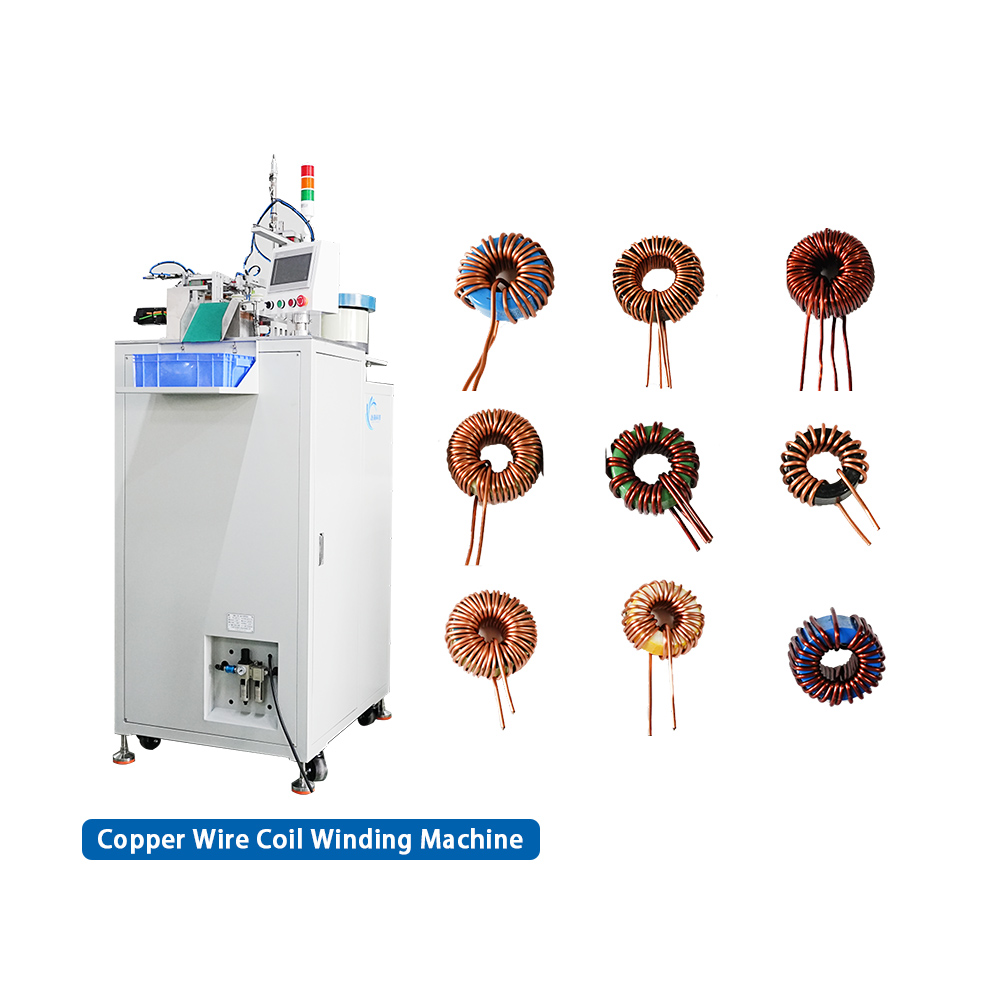
The main purpose of a toroidal coil is to control magnetic fields in electrical and electronic circuits. When current flows through the winding, it generates a magnetic field that is largely confined within the ring-shaped core. This characteristic makes toroidal coils useful in several applications.
Energy storage: When used as an inductor, a toroidal coil stores energy in its magnetic field and releases it as the circuit requires. This function is important in switching power supplies, DC-DC converters, and power regulation circuits.
Voltage transformation: When a toroidal core carries two or more windings, it can function as a transformer. Alternating current in the primary winding produces a changing magnetic flux, inducing voltage in the secondary winding. This allows electrical energy to be transferred between circuits while changing voltage and current levels.
noise suppression: Toroidal coils are also used in common-mode chokes and EMI filters. They help reduce unwanted high-frequency electrical interference that can affect sensitive electronic equipment.
For example, a toroidal transformer in an audio amplifier can provide the required power while helping limit stray magnetic fields that might otherwise introduce hum into nearby audio circuitry.
Toroidal coils are popular because their circular core geometry offers several practical advantages. However, actual performance depends on core material, winding design, operating frequency, and rated power.
The closed-loop magnetic path of a toroidal core helps confine magnetic flux within the core. This can reduce electromagnetic interference with nearby components compared with some open-core designs.
This advantage is particularly useful in audio equipment, precision measurement instruments, and compact electronic devices where unwanted magnetic coupling can affect signal quality.
The continuous magnetic path generally provides low magnetic reluctance, allowing the coil to achieve a desired inductance or transformer performance with an appropriate core and winding configuration.
In transformer applications, this can support efficient energy transfer and lower magnetizing current. Nevertheless, core losses, copper resistance, winding arrangement, and operating conditions must all be considered when evaluating overall efficiency.
Toroidal transformers often offer a relatively high power capacity for their physical size. Their circular shape can also simplify mounting in equipment enclosures.
For manufacturers designing power supplies or industrial control systems, this can help optimize internal space. The winding process, insulation requirements, and mounting method should still be evaluated against production cost and maintenance needs.
Toroidal coils serve different purposes depending on their electrical configuration.
Toroidal transformers are commonly used in linear power supplies, audio amplifiers, laboratory instruments, and industrial equipment. They transfer AC power between windings and can provide electrical isolation when designed accordingly.
For example, a transformer with a 230 V primary winding and a 23 V secondary winding has a nominal turns ratio of approximately 10:1. Under ideal conditions, this corresponds to a secondary voltage of about 23 V before accounting for regulation, winding losses, and loading effects.
A toroidal core can support windings designed to impede unwanted common-mode currents while allowing the intended power current to pass. These components are used in switching power supplies, communication equipment, and industrial electronics.
Their effectiveness depends on core permeability, winding configuration, frequency range, and parasitic capacitance. Engineers typically validate performance through impedance measurements and conducted-emissions testing.
Toroidal inductors store and release energy in circuits such as buck and boost converters. They can help smooth current, reduce ripple, and support voltage regulation.
For instance, an ideal inductor follows the relationship:
[ V=L\frac{di}{dt} ]
where (V) is the voltage across the inductor, (L) is inductance, and (di/dt) is the rate of change of current. This relationship helps engineers determine the inductance needed to achieve a target current ripple under specified operating conditions.
Selecting a suitable toroidal coil requires matching its electrical and magnetic characteristics to the intended application.
Core material: Ferrite is commonly used in high-frequency applications, while laminated steel and other magnetic materials may be suitable for lower-frequency power applications. Powdered iron is another option for certain energy-storage inductors.
Inductance or turns ratio: For an inductor, select the required inductance based on the operating frequency, current ripple, and circuit topology. For a transformer, determine the primary and secondary voltages, power rating, and required isolation.
Current rating and saturation: Check the rated current, winding temperature rise, and core saturation characteristics. An inductor driven beyond its intended operating range may experience a sharp reduction in effective inductance, leading to excessive current.
Operating frequency and temperature: Core losses can increase significantly under unsuitable frequency and flux-density conditions. Copper losses, insulation class, cooling, and ambient temperature also affect long-term reliability.
Mechanical and safety requirements: Consider the available installation space, mounting method, insulation system, creepage and clearance distances, and applicable electrical safety standards.
For example, a 50/60 Hz power transformer and a high-frequency switching inductor generally require different core materials and magnetic designs. Choosing a component based on physical size alone is not sufficient.
The primary difference is the shape of the core and the resulting magnetic-field distribution.
A toroidal coil uses a ring-shaped core that provides a largely closed magnetic path. Many conventional coils use cylindrical, E-shaped, or other core structures, while some have no magnetic core at all.
Toroidal designs can offer lower stray magnetic fields and good magnetic coupling. However, they may be more difficult to wind automatically, and insulation or lead routing can complicate manufacturing. Conventional designs may be more economical or easier to assemble in applications where magnetic shielding and compactness are less important.
The appropriate choice depends on the required inductance, power level, frequency, electromagnetic compatibility, production volume, and total component cost.
It can, depending on the application. A well-designed toroidal transformer may reduce certain magnetic losses and winding requirements compared with an alternative design of similar rating. However, efficiency also depends on core material, copper resistance, operating flux density, and load conditions. A datasheet or measured efficiency curve is more reliable than assuming all toroidal coils are inherently more efficient.
Yes. Its closed magnetic path can reduce external magnetic flux, making it useful in noise-sensitive circuits. A toroidal common-mode choke can also impede unwanted interference currents. Nevertheless, a toroidal component does not eliminate all EMI; circuit layout, grounding, shielding, and filtering remain important.
Testing depends on the component's intended function. Common checks include measuring DC resistance with a multimeter, measuring inductance with an LCR meter, and evaluating impedance or frequency response with suitable test equipment.
For transformers, engineers may also check turns ratio, insulation resistance, winding polarity, no-load current, and temperature rise. Under a specified test condition, an unexpected increase in winding resistance or no-load current may indicate a manufacturing defect or an unsuitable operating condition. High-voltage insulation tests should only be performed with appropriate equipment and safety procedures.
The purpose of a toroidal coil is to manage magnetic energy for power conversion, inductance, and electromagnetic interference suppression. Its ring-shaped core can provide a compact magnetic circuit, good coupling, and reduced stray magnetic fields. These characteristics make toroidal coils valuable in power supplies, transformers, audio equipment, industrial controls, and electronic filters.
To select the right component, engineers should evaluate inductance, power rating, core material, operating frequency, saturation current, temperature rise, and insulation requirements. Matching these factors to the actual application is essential for reliable electrical performance.

Specialised in automated winding equipment and system development, production, sales and technical services as one of the high-tech enterprises.

+0769 82312151
+86 135 8090 8886
+86 132 6737 9998
3F, No.51 Minghua Road, Liangjia Village, Shijie Town, Dongguan City, Guangdong Province, China
Copyright © 2026 Dongguan Zhiqiang Electronic Technology Co., LTD | Privacy Policy | Terms and Conditions
