


Why 80% of Coil Winding Problems Come From Wrong Machine Selection
In coil and inductor manufacturing, most production issues are not caused by materials or operators — but by the wrong machine configuration.
Wire breakage, unstable inductance, uneven winding tension, and low production efficiency are all symptoms of a deeper problem: equipment mismatch.
1. Transformer Coil Production Needs Stability, Not Just Speed
In transformer manufacturing, even small tension fluctuations can affect final inductance performance.
That is why modern production lines rely on fully automatic systems such as:
Fully Automatic Coil Winding Machine
These machines ensure consistent wire tension, stable layer arrangement, and repeatable coil geometry.
2. EMI and Common Mode Chokes Require Precision Control
Common mode chokes used in power electronics and automotive systems require extremely tight tolerance control.
Any deviation in winding density can directly affect EMI suppression performance.
To solve this, manufacturers use dedicated systems such as:
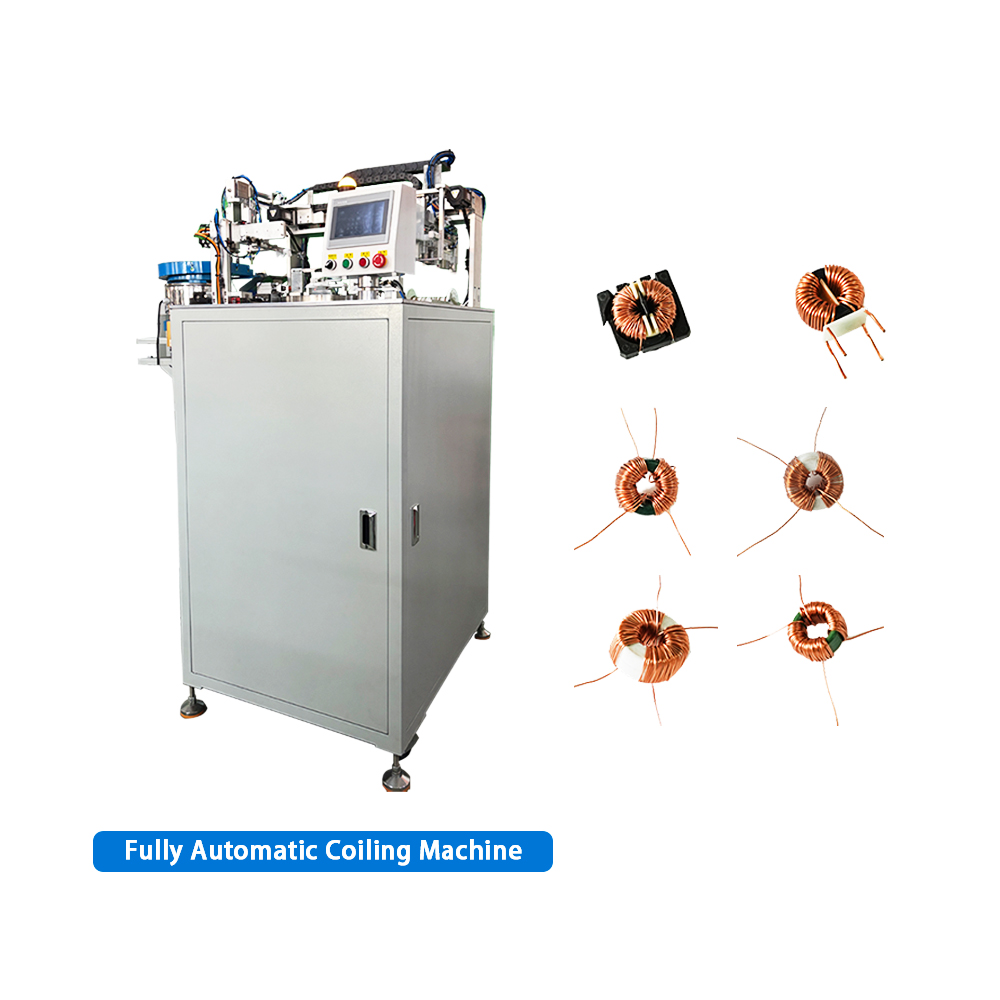
Fully Automatic Coiling Machine
This type of equipment is designed for high-precision EMI coil production with stable repetitive accuracy.
3. Manual Winding Cannot Support Mass Production
Manual or semi-automatic winding still exists in many factories, but it introduces variability:
Inconsistent tension control
Human fatigue errors
Low production efficiency
Unstable batch quality
For large-scale electronics manufacturing, Automation is no longer optional.
4. Inductor Manufacturing Requires Multi-Spec Flexibility
Modern inductor production requires machines that can switch between different wire diameters, coil shapes, and winding patterns.
This is especially important for:
Power inductors
RF inductors
High-frequency transformers
Automotive EMI components
A flexible winding system reduces downtime and improves production efficiency.
5. How to Choose the Right Coil Winding Machine
When selecting a coil winding solution, manufacturers should evaluate:
Winding precision (tension stability)
Speed vs quality balance
Wire diameter compatibility
Automation level (PLC / CNC control)
Integration capability with production lines
Choosing the wrong configuration can lead to long-term production losses and unstable product quality.
6. Industrial Applications of Coil Winding Technology
Modern Coil Winding Machines are widely used in:
Transformer manufacturing
Automotive electronics
Power supply systems
Telecommunication equipment
Renewable energy systems
Conclusion: Automation Is Now a Competitive Requirement
The coil manufacturing industry is rapidly moving toward full automation.
Companies that continue relying on unstable or low-precision systems will face increasing pressure in cost, quality, and delivery time.
Investing in the right coil winding technology is no longer optional — it is a competitive necessity.
