
2026-08-19 09:46:29
Choosing the right winding equipment is an important step in improving coil production efficiency, winding accuracy, and product consistency. Different applications require different winding methods. A machine designed for cable coiling is not necessarily suitable for precision inductor winding, while a high-speed automatic Coil Winding Machine may be unnecessary for low-volume production.
For manufacturers working with inductors, transformers, motors, cables, and other electromagnetic components, understanding the differences between winding equipment can help reduce production problems and improve overall manufacturing efficiency.
The first step in selecting a winding machine is to identify what needs to be wound. Cable winding, coil winding, inductor winding, and motor winding have different production requirements.
A cable winding machine is mainly designed for handling relatively long wires and cables. Its primary goals are controlled feeding, stable tension, neat winding, and efficient take-up. By comparison, a coil winding machine focuses more heavily on turn count, winding pitch, layer arrangement, and coil geometry.
For a detailed explanation of the terminology and differences between these machines, manufacturers can also refer to What Is a Cable Winding Machine Called?.
When producing inductors or transformers, the electrical performance of the finished component becomes particularly important. The number of turns, wire diameter, winding arrangement, core structure, and tension can all influence the final inductance, resistance, and thermal performance.
Wire diameter is one of the most important parameters when selecting winding equipment. Fine enamelled copper wire requires more precise tension control because excessive tension can damage the insulation or cause wire breakage.
On the other hand, larger wire may require a stronger feeding system and a machine capable of handling higher mechanical loads.
Wire tension must also remain stable during the entire winding process. If the tension is too high, the wire may stretch or damage its insulation. If the tension is too low, the winding can become loose, uneven, or inconsistent.
For this reason, modern Automatic Winding Machines increasingly use programmable tension control and servo-driven systems to maintain consistent winding conditions.
For precision inductors and transformer coils, turn count is not simply a production parameter. It directly affects electrical characteristics.
A small variation in the number of turns can change inductance and other electrical properties. Uneven winding can also increase parasitic effects and create differences between individual components.
An Automatic Coil Winding Machine can use digital control and programmed winding parameters to maintain repeatable turn counts. This is particularly valuable for high-volume manufacturing, where thousands or millions of components may need to meet the same specifications.
Manufacturers should therefore evaluate not only the maximum winding speed of a machine but also its repeatability, tension control, positioning accuracy, and ability to maintain stable winding quality.
There is no single winding machine that is ideal for every application.
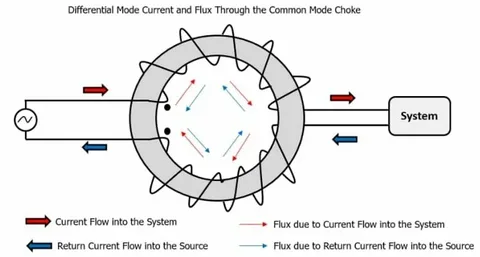
For standard cylindrical coils, spindle-type winding systems can provide a relatively simple and efficient solution. For common-mode chokes and other dual-wire applications, specialized common mode winding equipment may be more appropriate.
Toroidal components require another approach because the wire must be repeatedly passed through the center of a closed magnetic core. This requires a dedicated winding mechanism and accurate control of wire tension and winding position.
For cable and wire applications, the priority may shift toward continuous feeding, take-up speed, cable handling, and neat coil formation rather than extremely precise turn counting.
This is why selecting equipment according to the actual product structure is more important than simply choosing the machine with the highest advertised speed.
When production volume increases, manual winding can become difficult to control. Operator fatigue, inconsistent tension, incorrect turn counts, and variations in winding position can gradually affect product quality.
Automatic winding equipment can standardize these processes through programmable parameters and repeatable mechanical movement.
Depending on the application, an automated production system may include:
Automatic wire feeding
Tension control
Digital turn counting
Servo positioning
Automatic winding speed adjustment
Wire cutting
Coil forming
Insulation or taping processes
Electrical testing
The level of automation should be selected according to production volume and product complexity. A fully automatic system can provide significant advantages for mass production, while a flexible semi-automatic solution may be more practical for prototypes or small batches.
A common mistake is to evaluate a winding machine only by its winding speed. In actual manufacturing, overall productivity depends on much more than RPM.
Manufacturers should consider wire diameter, core dimensions, required turns, winding pattern, tension range, production volume, changeover time, operator requirements, and downstream testing.
For example, a high-speed machine may not improve productivity if frequent product changes require long setup times. Similarly, a machine with extremely high winding speed may not be suitable if the product requires delicate wire handling and strict winding accuracy.
Therefore, the best winding machine is not necessarily the fastest machine. It is the machine that provides the right combination of speed, precision, flexibility, stability, and automation for the specific production requirement.
The development of winding technology reflects the increasingly specialized requirements of modern electronics manufacturing. Cable coiling emphasizes efficient material handling, while precision coil winding focuses more strongly on electrical and dimensional consistency.
Understanding these differences makes it easier for manufacturers to select appropriate equipment and avoid using an unsuitable winding process.
For companies comparing different winding technologies, What Is a Cable Winding Machine Called? provides a useful starting point for understanding cable winding and coil winding terminology. You can also refer to the related winding machine guide for additional information before selecting equipment.
With the right winding method, machine configuration, and process parameters, manufacturers can achieve more consistent coils, reduce production defects, and build a more efficient automated winding production line.
For customized winding equipment, manufacturers should provide details such as wire diameter, core size, winding type, target production capacity, and required automation level. These specifications allow the machine configuration to be matched more closely to the actual production process.

Specialised in automated winding equipment and system development, production, sales and technical services as one of the high-tech enterprises.

+0769 82312151
+86 135 8090 8886
+86 132 6737 9998
3F, No.51 Minghua Road, Liangjia Village, Shijie Town, Dongguan City, Guangdong Province, China
Copyright © 2026 Dongguan Zhiqiang Electronic Technology Co., LTD | Privacy Policy | Terms and Conditions
