
2026-11-20 14:26:30
Toroidal coils play an important role in renewable energy systems by supporting power conversion, filtering, energy transfer, and electromagnetic noise reduction. Their circular magnetic core structure allows magnetic flux to remain largely contained within the core, making them useful in transformers, inductors, filters, and power electronics.
As solar power, wind energy, and battery storage systems become more widely adopted, reliable magnetic components are increasingly important for managing electrical power. Toroidal coils are used in different parts of these systems to help improve electrical performance and maintain stable operation.
Solar power systems convert energy generated by photovoltaic panels into electricity suitable for household, commercial, or grid applications. Toroidal magnetic components can support several stages of this process.
Solar inverters convert direct current (DC) generated by solar panels into alternating current (AC).
Toroidal inductors may be used in inverter power stages to help manage current ripple, store magnetic energy, and support switching operations.
Their compact magnetic structure can be useful in power electronics where space and electromagnetic performance are important design considerations.
Switching circuits in solar inverters can generate high-frequency electrical noise.
Toroidal common-mode chokes and inductors can be incorporated into filtering circuits to help suppress unwanted electromagnetic interference (EMI).
Proper filtering helps equipment meet electromagnetic compatibility requirements and reduces interference with nearby electrical systems.
Magnetic components influence the losses and thermal performance of power conversion circuits.
A properly designed toroidal coil can offer suitable inductance, controlled winding resistance, and relatively low leakage flux. These characteristics can support efficient power conversion when matched to the circuit's electrical requirements.
Actual efficiency depends on the core material, operating frequency, winding design, current level, and thermal conditions.
Wind turbines generate electrical power through rotating generators. The output may require conversion and conditioning before it can be connected to a grid or used by electrical equipment.
Power electronic converters regulate the electrical output from wind turbines.
Toroidal inductors may be used in converter circuits to smooth current, reduce ripple, and support power regulation.
The specific magnetic component depends on the converter topology, voltage level, switching frequency, and power rating.
Wind energy systems contain generators, converters, control circuits, and other electrical equipment.
These components can generate electromagnetic interference during operation. Toroidal chokes are sometimes used in input and output filters to help control conducted noise.
This is particularly important in systems where sensitive monitoring and control electronics operate alongside high-power equipment.
Battery energy storage systems rely on power conversion equipment to charge and discharge batteries while managing voltage and current.
DC-DC converters adjust voltage levels between battery packs and other electrical circuits.
Toroidal inductors can store and release magnetic energy during switching cycles, helping regulate current and voltage according to the converter design.
They may be used in battery charging systems, power management modules, and bidirectional converter circuits.
Charging systems require controlled electrical current to protect batteries and maintain suitable charging conditions.
Inductors in switching power supplies help regulate current and reduce electrical ripple. Toroidal designs may be selected where their magnetic properties, dimensions, and thermal performance meet the application requirements.
Several characteristics make toroidal coils useful in power electronics and renewable energy applications.
The closed-loop core geometry provides a continuous magnetic path, helping confine magnetic flux within the core.
This can reduce external magnetic fields compared with some other core configurations, although actual leakage depends on the winding arrangement and component design.
Toroidal cores can provide useful magnetic performance within a relatively compact structure.
This is beneficial for inverter assemblies, converter modules, and other equipment where installation space is limited.
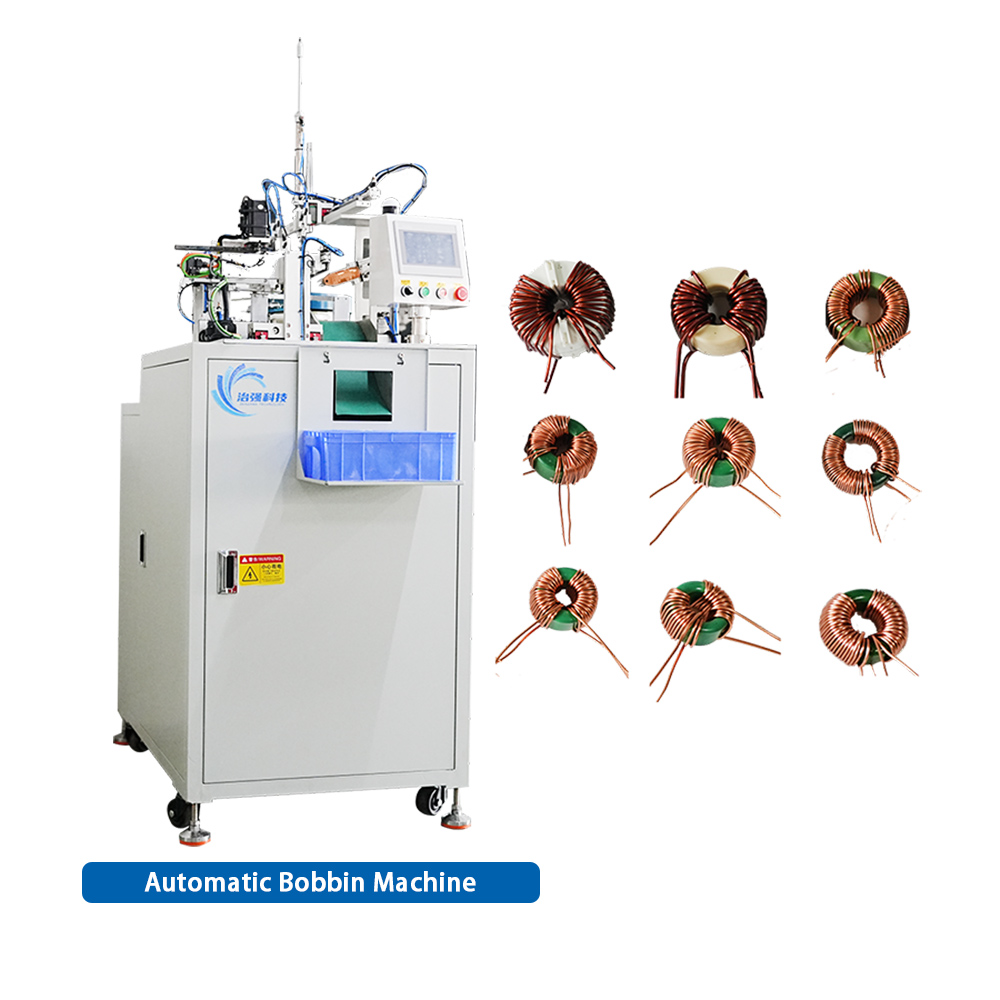
Toroidal coils can be manufactured using different core materials, including silicon steel, ferrite, and nanocrystalline materials.
Copper wire, winding turns, wire diameter, insulation systems, and winding arrangements can also be customized to meet electrical and mechanical requirements.
Core losses, winding resistance, insulation properties, and heat dissipation all influence component performance.
Selecting an appropriate core material and winding structure helps manufacturers balance efficiency, temperature rise, size, and operating reliability.
Toroidal coils support renewable energy systems through power conversion, current regulation, electrical filtering, and electromagnetic interference suppression. They are used in solar inverters, wind power converters, and battery energy storage equipment.
Their compact structure, low magnetic leakage characteristics, and flexible material options make them useful for different power electronics applications. However, the correct design must be based on operating frequency, current, voltage, temperature, and the electrical requirements of the system.

Specialised in automated winding equipment and system development, production, sales and technical services as one of the high-tech enterprises.

+0769 82312151
+86 135 8090 8886
+86 132 6737 9998
3F, No.51 Minghua Road, Liangjia Village, Shijie Town, Dongguan City, Guangdong Province, China
Copyright © 2026 Dongguan Zhiqiang Electronic Technology Co., LTD | Privacy Policy | Terms and Conditions
