
2026-11-20 14:28:11
Toroidal coils are used in audio equipment for power supply filtering, electromagnetic interference suppression, signal filtering, and transformer applications. Their circular magnetic core design provides a relatively efficient magnetic path and can help reduce stray magnetic fields, making them suitable for certain audio circuits.
They are commonly found in audio amplifiers, power supplies, crossover networks, and other electronic equipment. Their actual function depends on the circuit design and whether the component operates as an inductor, choke, or transformer.
Audio amplifiers require stable power supplies and carefully designed circuits to reproduce audio signals accurately.
Toroidal magnetic components can support these requirements in several ways.
Toroidal transformers are commonly used in some audio amplifiers to convert AC mains voltage into the lower voltage levels required by amplifier circuits.
The circular core provides a closed magnetic path, which can help reduce stray magnetic fields compared with conventional laminated EI-core transformers of similar design.
This can be useful in audio equipment because unwanted magnetic coupling may introduce hum into sensitive signal circuits.
After AC voltage is converted into DC, filtering circuits help reduce residual ripple.
Toroidal inductors and chokes may be used in power supply filtering stages to smooth current and reduce unwanted electrical noise.
A suitable filter design helps provide stable power to amplifier circuits, although the final noise performance also depends on rectification, capacitors, grounding, and circuit layout.
Audio amplifiers contain low-level signal circuits that can be sensitive to electromagnetic interference.
Toroidal transformers and chokes can help reduce magnetic coupling when properly designed and positioned.
However, enclosure layout, shielding, grounding, and wiring arrangements remain important factors in controlling audible hum.
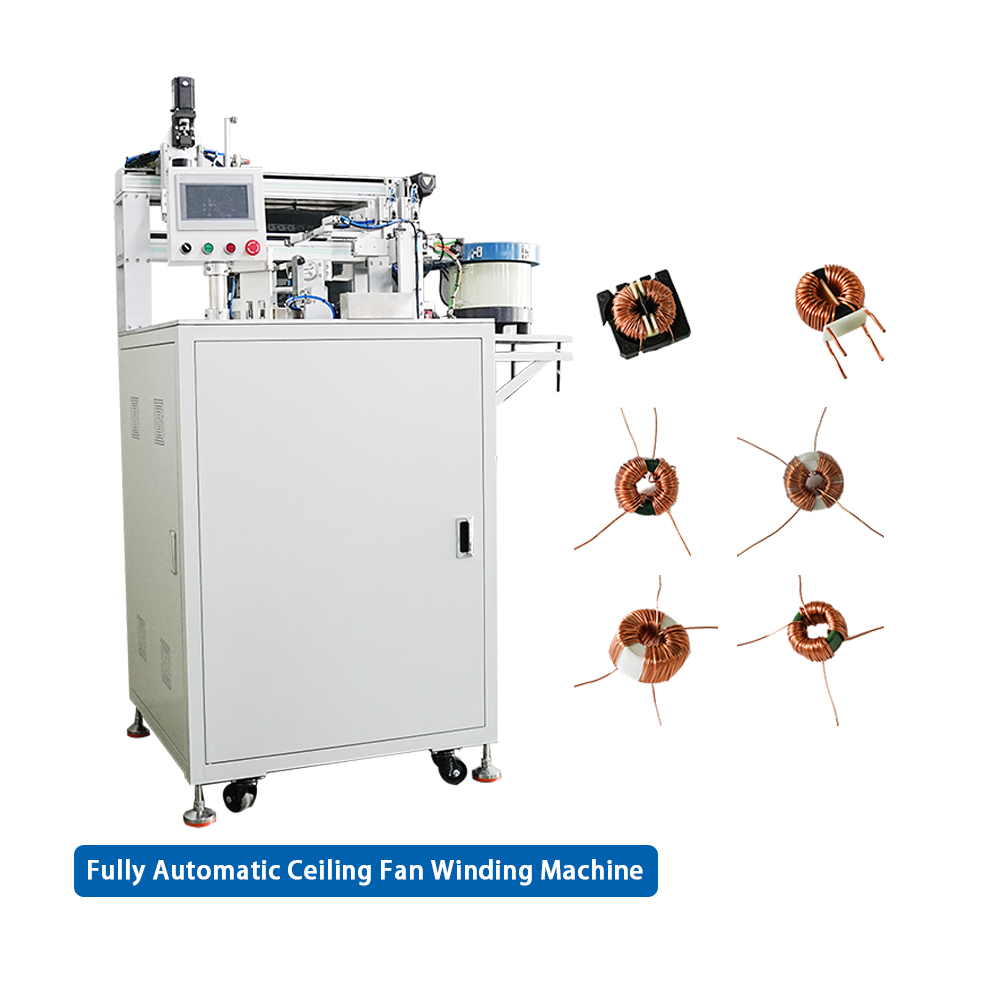
Inductors are used in different audio circuits to shape frequency response and control electrical signals.
Passive speaker crossover networks divide audio signals into frequency bands for different drivers, such as woofers, midrange speakers, and tweeters.
Inductors are commonly used in low-pass filter sections to control the frequencies sent to a woofer or midrange driver.
Toroidal inductors may be selected for their magnetic characteristics and compact construction. Their suitability depends on inductance, wire resistance, current handling, and core behavior.
Inductors can form part of LC filters used to control specific frequency ranges or reduce unwanted high-frequency components.
In some audio applications, toroidal coils are selected when the required inductance and electrical characteristics can be achieved within the available space.
Not all audio filters use toroidal inductors. Air-core inductors and other magnetic structures may be more suitable depending on the signal level and distortion requirements.
Toroidal common-mode chokes may be used in audio power and interface circuits to suppress unwanted conducted electromagnetic interference.
This can help reduce interference entering sensitive audio electronics through power or signal connections.
The effectiveness of noise suppression depends on the choke design, frequency range, impedance characteristics, and circuit implementation.
Toroidal components offer several characteristics that may benefit audio equipment design.
The toroidal core creates a relatively closed magnetic path, which can reduce external magnetic leakage.
This is particularly useful when designing amplifiers with sensitive input stages located near the power supply.
Toroidal transformers can offer a compact construction relative to their power handling requirements.
This allows equipment designers to use internal space efficiently, especially in integrated amplifiers and compact audio systems.
Transformer vibration can sometimes produce audible mechanical hum.
Toroidal transformers may have relatively low vibration under suitable operating conditions, but actual noise levels depend on core construction, winding tension, mounting, mains voltage, and mechanical assembly.
Toroidal coils can be manufactured with different core materials, wire diameters, winding turns, and insulation structures.
These options allow manufacturers to develop components for specific amplifier power supplies, filtering circuits, and audio equipment designs.
Selecting an appropriate toroidal coil requires evaluating its electrical performance and mechanical construction.
The inductance value must match the requirements of the audio circuit.
For crossover networks, inductance affects the filter's frequency response. For power supplies, it influences current ripple and filtering behavior.
Different core materials have different magnetic properties and frequency characteristics.
Silicon steel is commonly used in low-frequency power transformers, while ferrite is widely used in higher-frequency switching applications.
Air-core inductors may also be used in speaker crossovers where avoiding core saturation and magnetic nonlinearity is important.
The winding wire diameter and number of turns affect resistance, current capacity, and temperature rise.
For speaker crossover applications, excessive winding resistance can influence signal loss and the electrical behavior of the filter.
Winding consistency, insulation, core protection, and mounting structure influence component reliability.
For audio transformers, manufacturers may also need to consider vibration, acoustic noise, and installation position.
Toroidal coils are used in audio equipment for transformer power supplies, filtering circuits, crossover networks, and electromagnetic interference suppression. Their closed magnetic path, compact construction, and flexible winding options make them useful in different amplifier and audio system designs.
However, not every audio application requires a toroidal core. Component selection should consider inductance, operating frequency, current capacity, winding resistance, magnetic characteristics, and the overall circuit design.

Specialised in automated winding equipment and system development, production, sales and technical services as one of the high-tech enterprises.

+0769 82312151
+86 135 8090 8886
+86 132 6737 9998
3F, No.51 Minghua Road, Liangjia Village, Shijie Town, Dongguan City, Guangdong Province, China
Copyright © 2026 Dongguan Zhiqiang Electronic Technology Co., LTD | Privacy Policy | Terms and Conditions
