
2026-11-27 18:23:17
Magnetic core selection is an important part of coil winding design. Different core materials and structures influence inductance, magnetic flux, operating frequency, heat generation, and overall electrical performance. Choosing the right core helps engineers develop coils that meet specific electrical and mechanical requirements.
Different magnetic materials have different permeability, core loss characteristics, and frequency responses. These properties determine how a coil performs under different operating conditions.
Ferrite Cores
Ferrite cores are commonly used in high-frequency applications because they offer relatively low eddy current losses. They are widely found in switching power supplies, transformers, inductors, and electronic equipment.
Silicon Steel Cores
Silicon steel is often used in low-frequency magnetic applications, including power transformers and electrical equipment. Its magnetic properties make it suitable for applications involving relatively high magnetic flux.
Powdered Iron Cores
Powdered iron cores are used in various inductors and power electronics applications. Their distributed air gaps can help manage energy storage and saturation characteristics.
Amorphous and Nanocrystalline Cores
These materials are used in applications where magnetic losses and efficiency are important design considerations. They are commonly considered for specialized transformers, filters, and high-performance inductive components.
Core geometry determines how the winding is arranged, how much space is available for copper wire, and how magnetic flux travels through the core.
Common magnetic core structures include:
Toroidal cores: The winding follows a circular path around the core. This structure is commonly used in toroidal transformers, inductors, and filtering components.
E-core structures: These provide accessible winding windows and are frequently used in transformers and power inductors.
U-core structures: Their open geometry can accommodate different winding arrangements in power and industrial electrical equipment.
Pot cores: Their enclosed structure can help reduce external magnetic field leakage and protect the winding.
The available winding window, core dimensions, and insulation requirements should all be considered during the design stage.
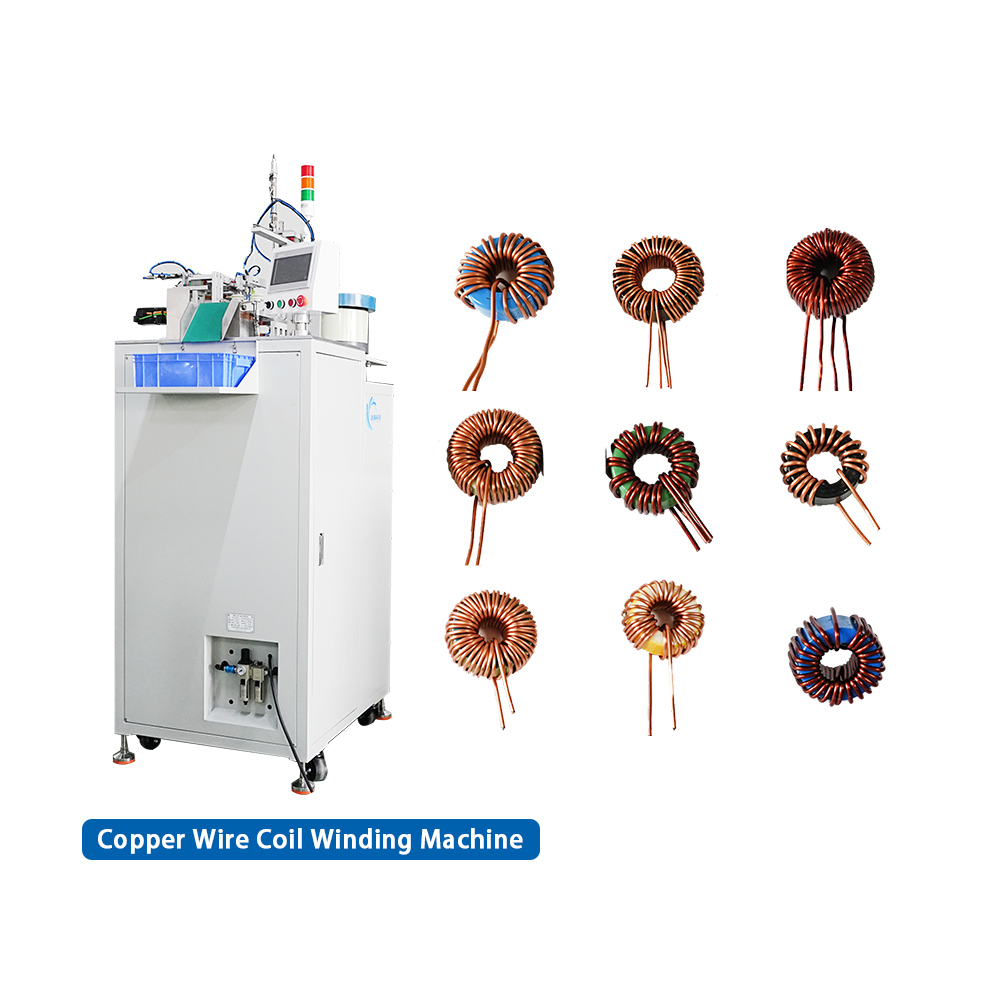
Core selection directly influences several important coil winding parameters.
Number of Turns
The required number of turns depends on the target inductance, core permeability, magnetic path, and operating conditions. A different core material or geometry may require adjustments to the winding configuration.
Wire Diameter
Wire diameter affects winding resistance, current capacity, and the amount of copper that can fit within the available winding space. Engineers need to balance electrical requirements with winding space limitations.
Winding Arrangement
Some core structures support concentrated windings, while others require more specific winding paths. The arrangement also affects leakage inductance, parasitic capacitance, and thermal performance.
Insulation and Clearance
The winding design must account for insulation thickness, electrical isolation, and applicable safety requirements. These factors can reduce the available space for copper wire.
Different electrical applications have different magnetic and thermal requirements.
| Application | Common Core Considerations |
|---|---|
| High-frequency transformers | Ferrite cores and suitable high-frequency winding designs |
| Power inductors | Powdered iron or ferrite cores, depending on operating conditions |
| Toroidal transformers | Toroidal cores with evenly distributed windings |
| Common-mode chokes | Ferrite cores selected for the required frequency range |
| Low-frequency power transformers | Silicon steel or other suitable magnetic core materials |
The final selection should consider operating frequency, current, voltage, temperature, magnetic saturation, and required electrical performance.
Before production, engineers should evaluate the complete magnetic and electrical design rather than selecting a core based on shape alone.
Important considerations include:
Operating frequency: Core materials have different frequency characteristics and loss profiles.
Current and magnetic flux density: The core must operate within suitable magnetic limits.
Temperature rise: Core losses and winding resistance both contribute to heat generation.
Available winding space: The core window must accommodate the required wire, turns, and insulation.
Production requirements: Core geometry and winding accessibility can affect manufacturing complexity and consistency.
Different magnetic core types affect coil winding design through their material properties, geometry, magnetic characteristics, and available winding space. Ferrite, silicon steel, powdered iron, and other core materials serve different electrical applications.
By evaluating core characteristics together with winding parameters, engineers can develop coil assemblies that meet their intended electrical, thermal, and mechanical requirements.

Specialised in automated winding equipment and system development, production, sales and technical services as one of the high-tech enterprises.

+0769 82312151
+86 135 8090 8886
+86 132 6737 9998
3F, No.51 Minghua Road, Liangjia Village, Shijie Town, Dongguan City, Guangdong Province, China
Copyright © 2026 Dongguan Zhiqiang Electronic Technology Co., LTD | Privacy Policy | Terms and Conditions
