
2026-10-08 17:56:56
If you are selecting an automatic coil winding machine for EMI filter production, the common mode versus differential mode decision is the first fork in the road. These two coil types suppress different noise paths, require different winding methods, and demand different machine capabilities. Choosing the wrong platform means either overspending on automation you do not need or ending up with a machine that cannot hold your tolerance. This guide breaks down the technical differences, matching them to machine specifications so you can make the call before requesting a quote.
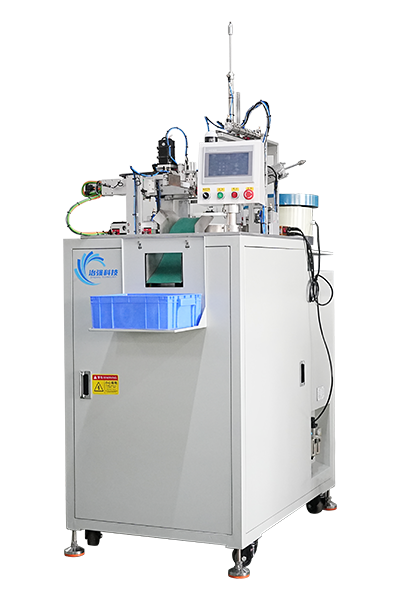
Common mode chokes use two windings wound in the same direction on a shared magnetic core. The goal is to cancel common mode noise — interference that appears on both power lines simultaneously relative to ground. Differential mode coils use two wires wound in opposite directions on opposing conductors, targeting noise that travels between the two lines. This structural difference directly determines which winding machine you need.
| Parameter | Common Mode | Differential Mode |
|---|---|---|
| Winding Method | Same direction, two windings on shared core | Opposite directions, dual-wire parallel |
| Noise Target | Common mode noise (line-to-ground) | Differential mode noise (line-to-line) |
| Wire Diameter Range | 0.4–1.5 mm | 0.4–2.0 mm (heavier gauge for high current) |
| Core OD Range | 12–40 mm | 16–40 mm (up to 35 mm OD general) |
| Typical Applications | SMPS, EV OBC, solar inverter, telecom | Power electronics, automotive, appliances |
A Common Mode Winding Machine is built for bifilar winding — two wires fed simultaneously onto the same core in the same direction. The critical capability here is turn symmetry: both windings must have identical turn counts and balanced distribution to achieve proper noise cancellation. The machine uses CNC-controlled digital stepping with synchronized turn counting to guarantee this precision.
A Differential Mode Winding Machine (model ZQRX-C1-003) handles dual-wire parallel winding in opposite directions. The challenge with differential mode coils is heavier wire gauges — up to 2.0 mm copper — which puts greater stress on tension control, guides, and the winding shuttle. The machine must maintain stable tension across two wires pulling in opposite directions without snapping or overlapping.
Need a machine configured for your specific coil? Send your core dimensions and wire gauge — our engineering team will confirm compatibility within 24 hours. Request a configuration check.
When evaluating an inductor winding machine for either coil type, five specifications separate a machine that works from one that holds tolerance batch after batch:
| Specification | Why It Matters |
|---|---|
| Tension control range | Determines wire handling from 0.02 mm fine wire to 2.0 mm heavy gauge; closed-loop servo maintains ±2% of set tension |
| Core OD range | Must cover your smallest and largest toroid without fixture changes |
| Wire diameter span | Common mode: 0.4–1.5 mm; differential mode: 0.4–2.0 mm; confirm the machine covers your full range |
| Production rate | Single station ~55 pcs/hour; dual station ~110 pcs/hour — size the machine to your shift output target |
| Program storage | Multi-recipe storage enables fast model changeover for mixed-product lines |
Choose a common mode platform when your product line targets EMC compliance — power supply filters, EV onboard chargers, solar inverter EMI stages, and telecom rectifiers. These applications need bifilar or multi-wire winding on toroidal cores where turn symmetry directly affects leakage inductance and noise suppression performance. If your coil requires two windings with identical turns on a shared core, a common mode winding machine is the correct platform.
For a deeper dive into common mode machine selection criteria including tension ranges, core compatibility, and winding pattern programming, see our guide on choosing an automatic common mode winding machine for toroidal chokes.
Choose a differential mode platform when your coils handle high-current power applications — power electronics, automotive electronics, and household appliance manufacturing where differential mode noise between conductors is the primary concern. The ZQRX-C1-003 model supports wire diameters from 0.4 to 2.0 mm and core outer diameters from 9 to 35 mm, with a winding mode that switches between differential and dual-wire parallel winding. This flexibility makes it suitable for manufacturers running mixed differential mode and standard inductor production on the same line.
For detailed specifications and application notes on this platform, see our differential mode winding machine guide for heavy wire inductor automation.
This is one of the most common questions from manufacturers producing both common mode and differential mode chokes. The short answer: the differential mode winding machine (ZQRX-C1-003) supports switchable winding modes — differential mode and dual-wire parallel winding. However, switchable does not mean optimized. A machine built specifically for common mode chokes will deliver better turn symmetry and bifilar winding consistency because its shuttle, guides, and tension system are tuned for that specific coil geometry. If your production volume justifies dedicated platforms, running two machines is more efficient than reconfiguring one.
Whether you need a coil winding machine for common mode or differential mode coils, the quote accuracy depends entirely on the information you provide. Send these items to receive a configured quotation:
Ready to get a configured quote? Send your coil spec sheet and we will return a machine recommendation with cycle time analysis within 24 hours. Request your quotation.
A common mode winding machine is designed for bifilar winding — two wires wound in the same direction on a shared core to cancel common mode noise. A differential mode winding machine handles dual-wire parallel winding in opposite directions, targeting differential mode noise. The machines differ in shuttle design, tension control range, and fixture configuration.
The differential mode platform (ZQRX-C1-003) supports switchable winding modes, but a machine dedicated to one coil type will always deliver better consistency. If your volume justifies it, running two dedicated machines is more efficient than reconfiguring a single platform between coil types.
The Common Mode Winding Machine supports 0.4–1.5 mm wire diameter with core OD from 12–40 mm. The differential mode winding machine supports 0.4–2.0 mm wire diameter with core OD from 9–35 mm. Always confirm your specific wire gauge and core size falls within the machine's processing range before ordering.
On a representative inductor coil, a single-station platform produces approximately 55 pieces per hour. A dual-station configuration roughly doubles that to 110 pieces per hour. Actual output depends on turn count, wire gauge, and core size.
Standard lead time is approximately 15 days for a standard configuration. Custom fixtures, trial winding rounds, or unusual specifications may extend the timeline. The delivery date is confirmed on the quotation.
Choosing between a common mode and differential mode winding machine comes down to your coil structure, wire gauge, and noise suppression target. Common mode platforms excel at bifilar winding for EMC compliance; differential mode platforms handle heavier wire and dual-direction winding for high-current applications. Match the machine to the coil, confirm the specifications against your production requirements, and send suppliers enough information to quote a configured platform rather than a catalogue number. If you need help evaluating which machine fits your production line, contact Chi Keung with your coil drawing and we will recommend the right platform.

Specialised in automated winding equipment and system development, production, sales and technical services as one of the high-tech enterprises.

+0769 82312151
+86 135 8090 8886
+86 132 6737 9998
3F, No.51 Minghua Road, Liangjia Village, Shijie Town, Dongguan City, Guangdong Province, China
Copyright © 2026 Dongguan Zhiqiang Electronic Technology Co., LTD | Privacy Policy | Terms and Conditions
